Moon Landing Fuel Count Rises
New internal estimates suggest significantly more tanker flights are needed to support the Artemis lunar lander.
By Priya Sharma ·
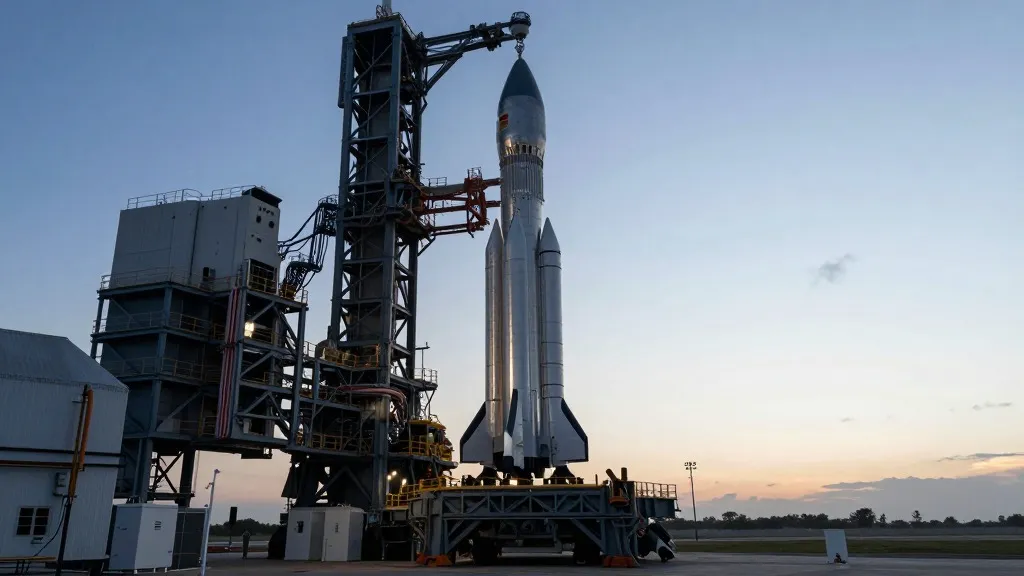
For investors and observers tracking the space economy, a new benchmark has emerged regarding the logistical costs of returning humans to the Moon. The latest internal figures suggest that the number of orbital refueling operations required to fuel a lunar lander is higher than previously estimated, potentially complicating the timeline for the Artemis program.
NASA has historically treated the specific count of Starship launches needed to fill a depot in low-Earth orbit with unusual discretion. While the agency has not been secretive about its broader goals, it has guarded this particular metric with a level of caution reminiscent of protecting sensitive nuclear data. This opacity has left the market guessing about the true scale of the logistical challenge SpaceX faces in supporting the Human Landing System.
In 2023, Lisa Watson-Morgan, then-director of the Human Landing System, indicated to Ars Technica that while the agency had a general understanding of the requirements, she was reluctant to commit to a precise figure. She later characterized the requirement as being in the "high single digits to the low double digits," implying a need for roughly twelve launches. This estimate included one depot Starship and eleven tanker vehicles carrying liquid oxygen and methane propellant.
Other officials have previously cited figures in the "high teens," reflecting a range of uncertainty that has persisted for years. The underlying assumption behind these estimates has been that SpaceX would significantly enhance the lift capacity of the Starship vehicle. Such improvements were expected to reduce the total number of tanker flights necessary to reach the required propellant mass for a lunar round trip.
However, concerns are now growing within NASA that these anticipated improvements in payload capacity may not materialize quickly enough. If the vehicle’s lift capability does not increase substantially, the current vehicle configuration may not allow Starship to play a meaningful role in landing astronauts on the Moon within the current decade. This timeline pressure adds urgency to the development of the propellant transfer infrastructure.
The new estimate surfaced during the quarterly meeting of the NASA Aerospace Safety Advisory Panel on Thursday. During the session, Charlie Precourt, a panel member and former NASA astronaut, discussed the risks associated with the Artemis Program. His presentation highlighted the specific challenges surrounding the landing of humans on the lunar surface, bringing the refueling logistics to the forefront of the safety discussion.
The shift in the estimated launch count signals a potential recalibration of the project's operational scope. For the business of spaceflight, this means a higher volume of flights and a longer period of intensive orbital operations before the first crewed lunar landing. The market will now be watching closely to see if SpaceX’s engineering roadmap can still deliver the capacity gains needed to lower this number, or if the program must proceed with a higher, more expensive logistical baseline.
While the exact figure remains a closely guarded secret, the trend is clear: the margin for error in the refueling process is narrowing. As the panel continues to evaluate risks, the focus remains on whether the current hardware can meet the rigorous demands of deep space travel without excessive reliance on repeated orbital rendezvous.
Source: Ars Technica